
A Feature on the “Still・Life” Special Exhibition at TFAM Children’s Art Education Center
Hearing the Whispers of Still Life Bringing the Art Museum into Everyday Life
— A Feature on the “Still・Life” Special Exhibition at TFAM Children’s Art Education Center
By Lei Zixuan & Wang Yuxin
May 6, 2025
When we were children, we could always use our imagination to give life to objects around us: fluttering curtains became ocean waves, hair dryers turned into pistols, and cardboard boxes and tin cans transformed into robots. As animation students, we often resonate with children’s rich imaginations toward objects. The “Still・Life” exhibition currently on view at the Taipei Fine Arts Museum (TFAM) invites us to revisit that childhood wonder and examine everyday items with curiosity and care.
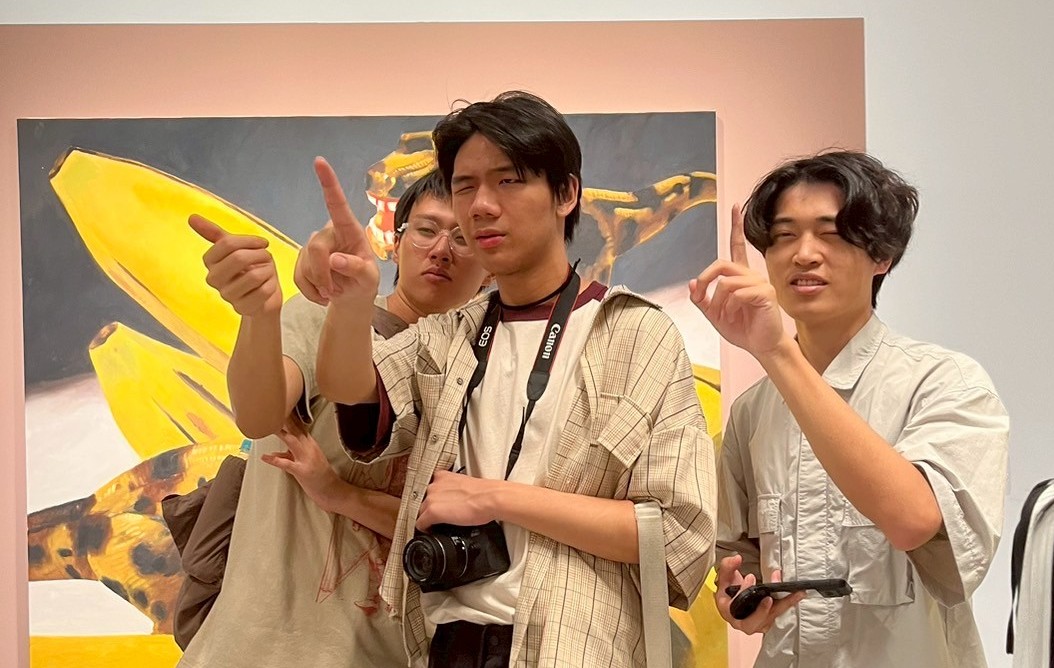
The curator invited the students to use a monocular lens and obscure certain objects in the painting in order to understand how the spatial relationships between objects influence the balance of the composition.
The Language of Still Life — Life, Death, and Time
Still life has long been one of the most prominent genres in art history due to its visual appeal, accessibility, and decorative qualities.
Its origins trace back to ancient Greek and Roman times, where early artists painted vessels and fruit to commemorate significant events in life. After a dormant period, 17th-century Dutch painters brought still life to its peak. Beneath the surface of their refined works often lie deeper meanings—decaying fruit and extinguished candles symbolized the brevity of life and the fleeting nature of glory. Musical instruments, clocks, and flowers often alluded to the constancy of time and the captured moment within it. Through both artistic and interpretive processes, these objects have come to carry new layers of memory, emotion, and even philosophical meaning.
In 20th and 21st century Taiwan, artists also skillfully depict local surroundings and objects with a keen eye. Artist Kuo Po-Chuan applied Western oil painting techniques on traditional xuan paper, incorporating Chinese elements such as patterned fabrics. The arrangement of fruit in his paintings is intentional, using specific proportions to create a sense of irreplaceable balance—much like musical notes arranged in rhythm across the canvas.
Chang Yi-Hsiung, who spent much of his life traveling, often painted cherished personal belongings such as his guitar. With bold black lines, he infused his works with emotional memories and inner turbulence, transforming still life into a personal visual record. Liu Chi-Hsiang, Taiwan’s first art student to study in Europe, extensively copied classical artworks in foreign museums, bringing the charm of Western art to Taiwanese audiences. His own work reflects these influences, forming a style rich with exotic undertones.
This exhibition also collaborates with galleries to feature contemporary artists including Wang Liang-Yin, Wu Sih-Chin, Lai Jiu-Cen, and Walking Grass Farm/Art Collective. Through three perspectives—“Object & Object,” “Object & Time,” and “Deconstruction of Objects”—the exhibition guides visitors in exploring the vocabulary of art.
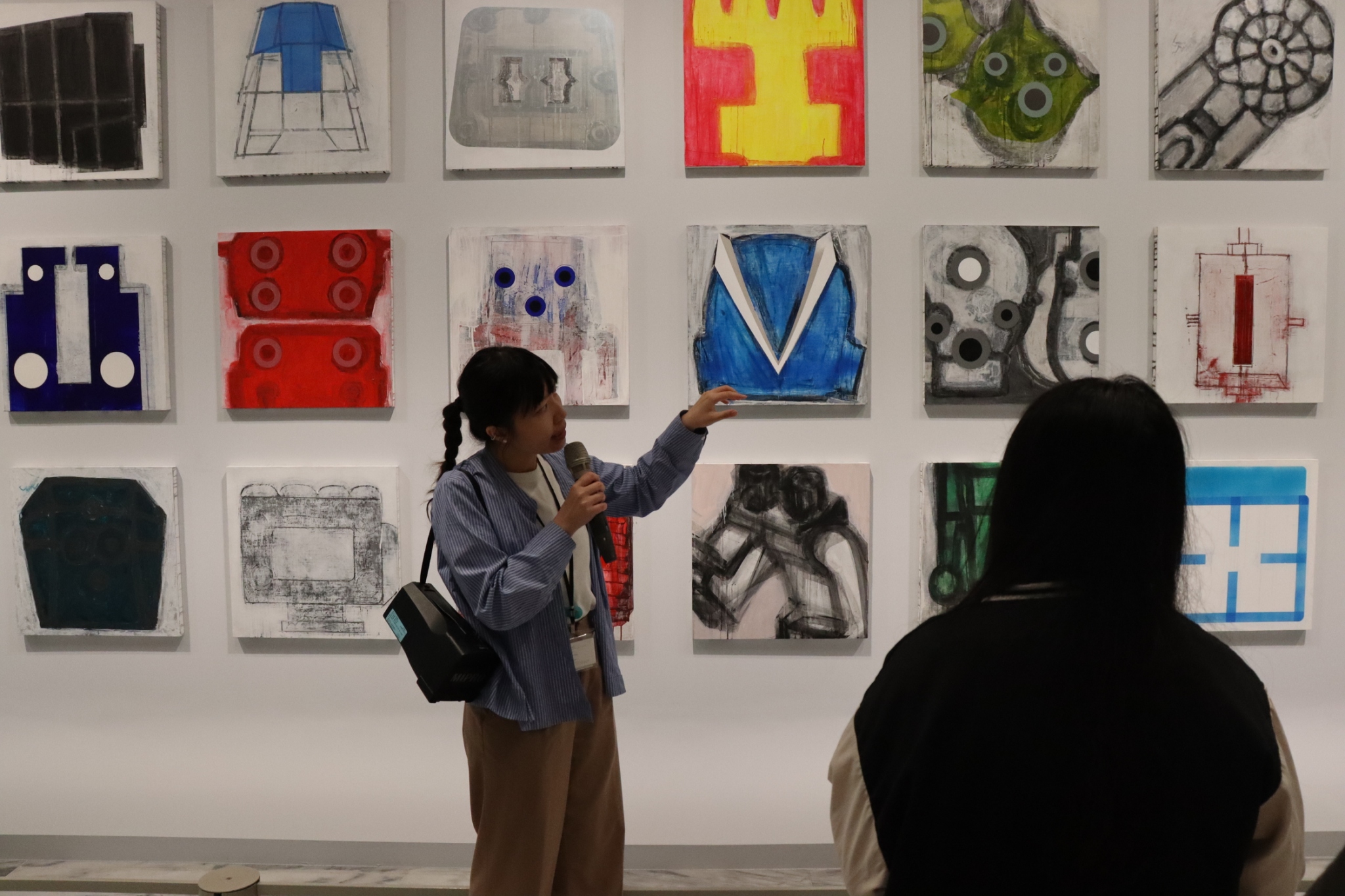
The curator introduced artist LAI Chiu-Chen's series "Part of Toys III", which draws inspiration from observing toys from multiple perspectives.
Three Key Themes: Space, Time, and Reconstruction
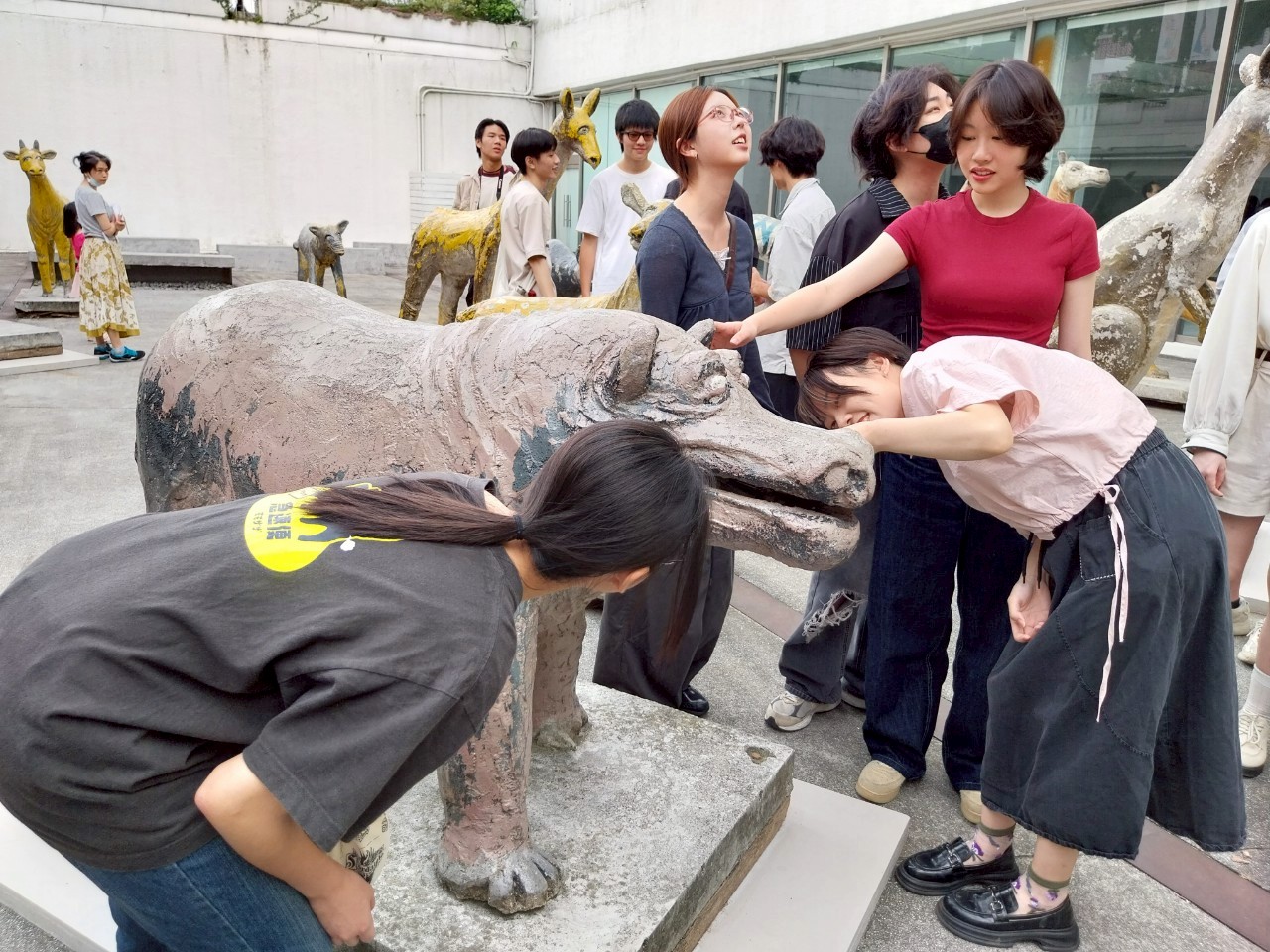
Animation students engaged with Chiu’s Chen-Hung’s “Concrete Zoo” with fresh and curious eyes, exploring the work through playful interaction.
Before entering the main exhibition space, visitors will encounter Chiu Cheng-Hung’s Cement Zoo in the courtyard—a nostalgic reminder of schoolyard animal sculptures or cement slides in childhood parks. These cement animals were transported from Hualien, allowing visitors to freely interact and take photos with them, deepening the connection between art and daily life.
The exhibition uses multimedia installations to spark visitors’ curiosity and imagination about “objects.” For instance, imagining different forms of a watermelon: as a round fruit, sliced into triangular wedges, blended into juice inside a cylinder, or displayed on a square-shaped fruit calendar.
Each of the three major themes features interactive activities: magnetic shape puzzles, live drawing stations to recreate still life, animal head assembly games inspired by artist works, and rotating observation boards for photographing toys from unusual angles.
While people often assume that art and knowledge are “too difficult” for children, curator Wang Wei-Ting believes otherwise:
“Children, with their rich curiosity and imagination, have far more learning and memory capacity than we often give them credit for. By encouraging both adults and children to engage hands-on with art, the goal is to demystify the creative process and guide visitors to ‘look back at the original work’ through interaction. This makes art a part of everyday life and an essential part of children’s growth, while also offering people of all ages the chance to enjoy meaningful museum experiences.”
When We Converse with Still Life: Seeing Art All Around Us
Because the artworks come from various lenders, careful consideration was given to transport logistics, the museum’s environmental conditions, and the temperature and humidity of the galleries. These precautions ensure the best possible preservation of delicate works and reflect the artists’ professional expectations. As curator Wang Wei-Ting says:
“In exhibition planning, the artworks are always the stars.”
This level of detail shows the team’s respect for the artists and their commitment to safety and environmental care.
Through hands-on interaction, reassembly, and observation, the exhibition allows us to rediscover the stories behind classic still life paintings. By slowing down and viewing the world with childlike curiosity, we can hear the “whispers” of objects and feel the warmth of art. If you’ve ever thought still life was just decorative, visit the museum yourself and discover how art has always been a part of our daily lives.
Through their conversations with the TFAM curators, animation students gained insights into the practical considerations and professionalism behind exhibition planning. They also connected these learnings to their experiences teaching animation in rural and Indigenous elementary schools, realizing that curating requires not only creativity and keen observation but also strong communication and the ability to apply one’s expertise flexibly.
This project was part of a course in project management to prepare for a major upcoming event by the Department of Animation: the 15th Kuandu International Animation Festival. Learning about curating at a museum helped students better anticipate challenges and strengthen their planning skills for next semester’s event.
The 2025 Kuandu International Animation Festival is currently accepting global submissions and will take place from October 26 to November 1 at the Arts & Ecology Building of Taipei National University of the Arts. We warmly invite readers to attend and experience the boundless creativity of animation artists from around the world.
More information is available on the festival’s official website and social media pages.
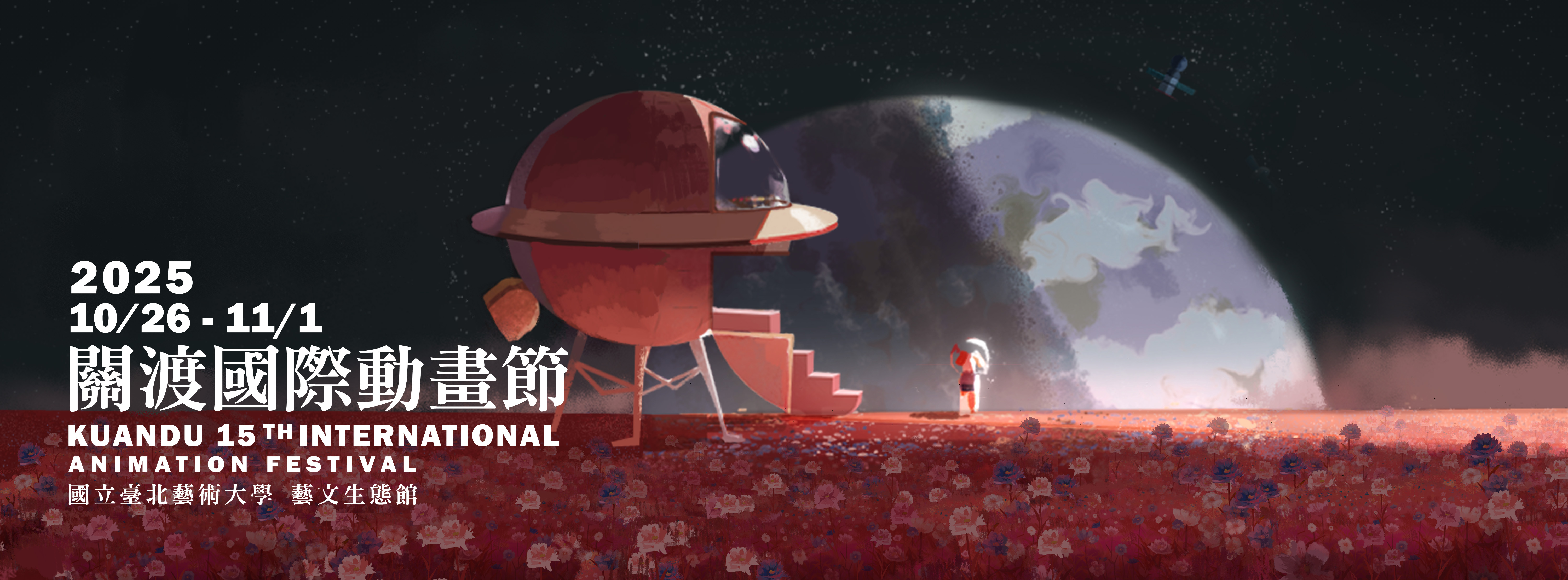
Image: Kuandu Animation Festival Official Website Homepage (https://kdiaf.tnua.edu.tw/web/about/about_01.jsp?cp_id=CP1744044223642&lang=tw)