
Workshop__Abstract Animation with Graphical Sound
Date & Time: 10/27 (MON) 14:00~17:00
Location: NTUA Animation and New Media Building, Room A102
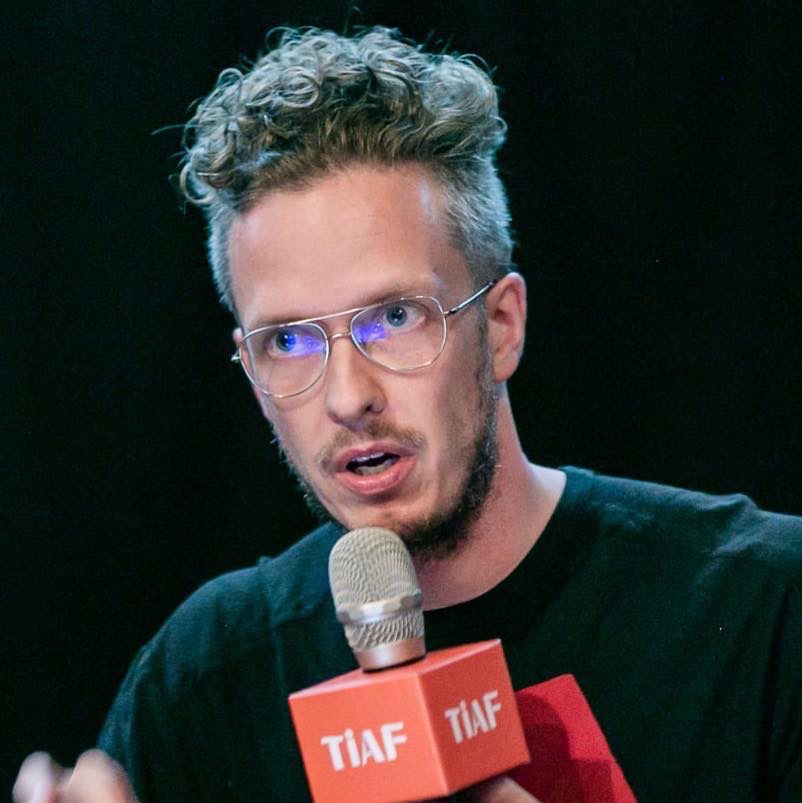
Keynote Speaker: Max Hattler
Max Hattler is a German-born animator and audiovisual artist. He has been active in the field of abstract and experimental for over twenty years. After studying at Goldsmiths and the Royal College of Art in London, and for one semester at Escuela de Cine de Madrid in Spain, he completed a doctorate in fine art at the University of East London. Since ten years, Max Hattler is based in Hong Kong, where he is a tenured Associate Professor at the School of Creative Media at City University of Hong Kong. His work has been shown worldwide and has received prizes from Annecy Animation Festival, Prix Ars Electronica, Montreal Festival du Nouveau Cinema, Punto y Raya Festival, Cannes Lions and London International Animation Festival, among many others. He is the co-founder and chairman of Relentless Melt, a Hong Kong-based society which regularly presents abstract and experimental animation screenings in Hong Kong and internationally.
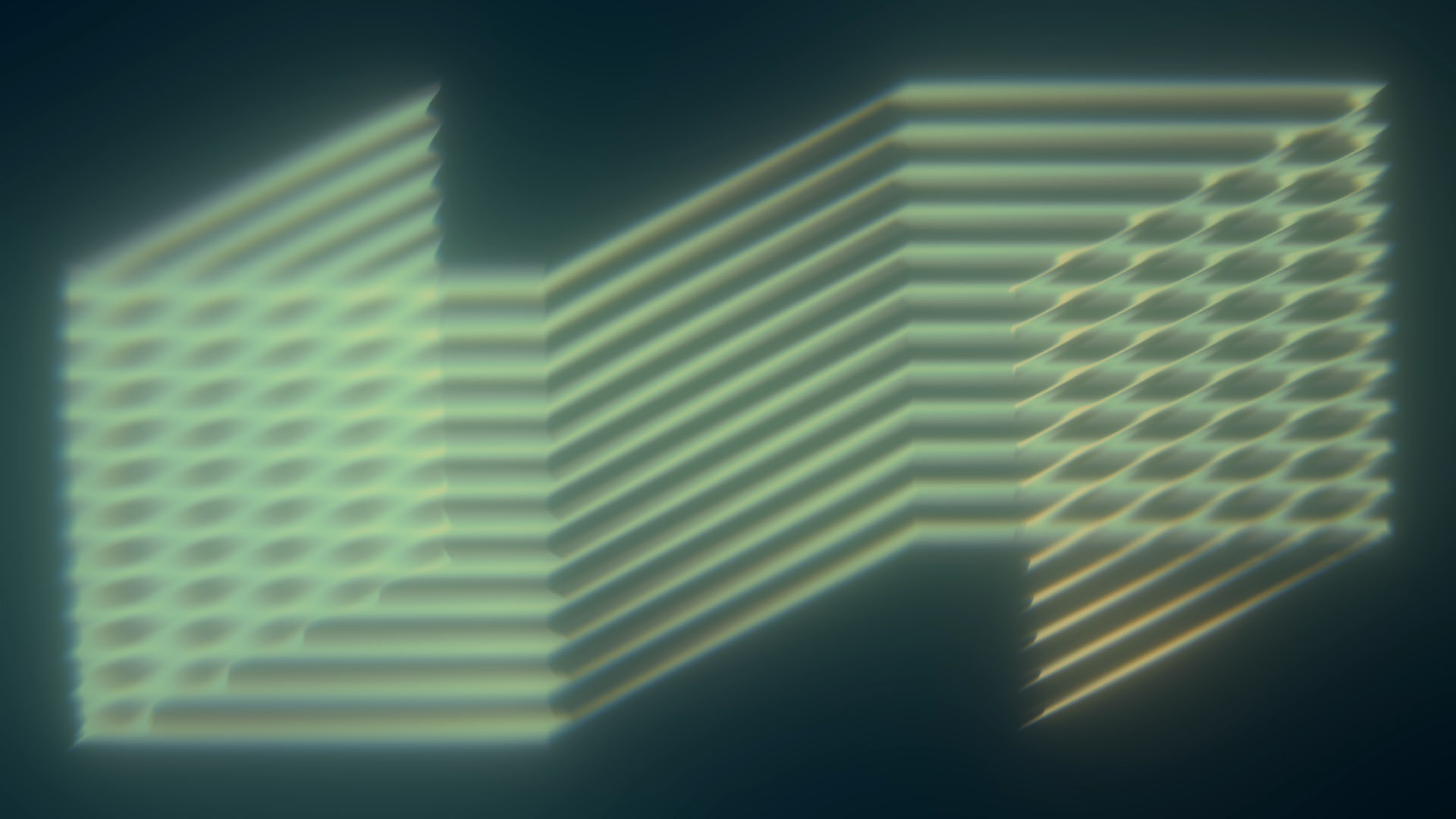
In this workshop, experimental animator Max Hattler will give insights into his graphical sound films (Norm, O/S) and performances (Pattern/Sound: Live), where the sound is generated directly from abstract animated images. Participants will be able to create their own graphical sound using AEO-Light, an open-source software designed to extract audio from optical sound tracks of motion picture film.
Writer: Ming-feng,Chiang
In the experimental animation workshop, instructor Max Hattler guided students from the Animation Department of Taipei National University of the Arts through a series of examples and hands-on exercises to explore the interplay between sound and image, and to investigate creative approaches to abstract animation and audiovisual co-construction.
At the beginning of the course, Max introduced the working principles of the traditional film optical soundtrack, explaining how audio signals are recorded onto film—namely, by altering the area of the “optical soundtrack / visualized form of sound.” The shape of the soundtrack is represented through variations in line width. He further clarified how the density and amplitude of waveforms correspond to changes in pitch and volume: sparser lines indicate lower pitch, while denser lines indicate higher pitch; greater amplitude results in louder sound, whereas smaller amplitude produces softer sound. Through this principle, creators can design patterns directly on the image, allowing different lines, ripples, or high-contrast graphics to be read as audio signals, transforming them into distinct pitches, volumes, and timbres. After the explanation, students gained a more intuitive understanding of how images can be converted into sound, as well as a renewed appreciation for the role of visuals in generating sound.
During the hands-on session, Max demonstrated the preprocessing workflow in After Effects, providing soft masks for compositing so students could integrate them with their own visual materials. He then used AEO-Light—an open-source software developed by USC’s Moving Image Archive specifically for extracting audio from optical film soundtracks—to generate sound from images processed in After Effects, enabling students to create their own “visualized sound.” The instructor also provided relevant materials and tutorial videos for future reference, review, and extended experimentation.
This workshop encouraged participants to rethink the boundaries between sound and image, experiencing firsthand the intersection of the visual and the auditory—allowing images to “speak” in the most direct way. By combining theory and practice, the workshop not only inspired new technical explorations but also deepened TNUA students’ understanding of the possibilities of sound within animation.