

International Lecture__UNSUNG WOMEN HEROES OF ANIMATION
Date & Time: 10/29 (WED) 15:30~17:10
Location: Literary Arts Ecology Hall K301
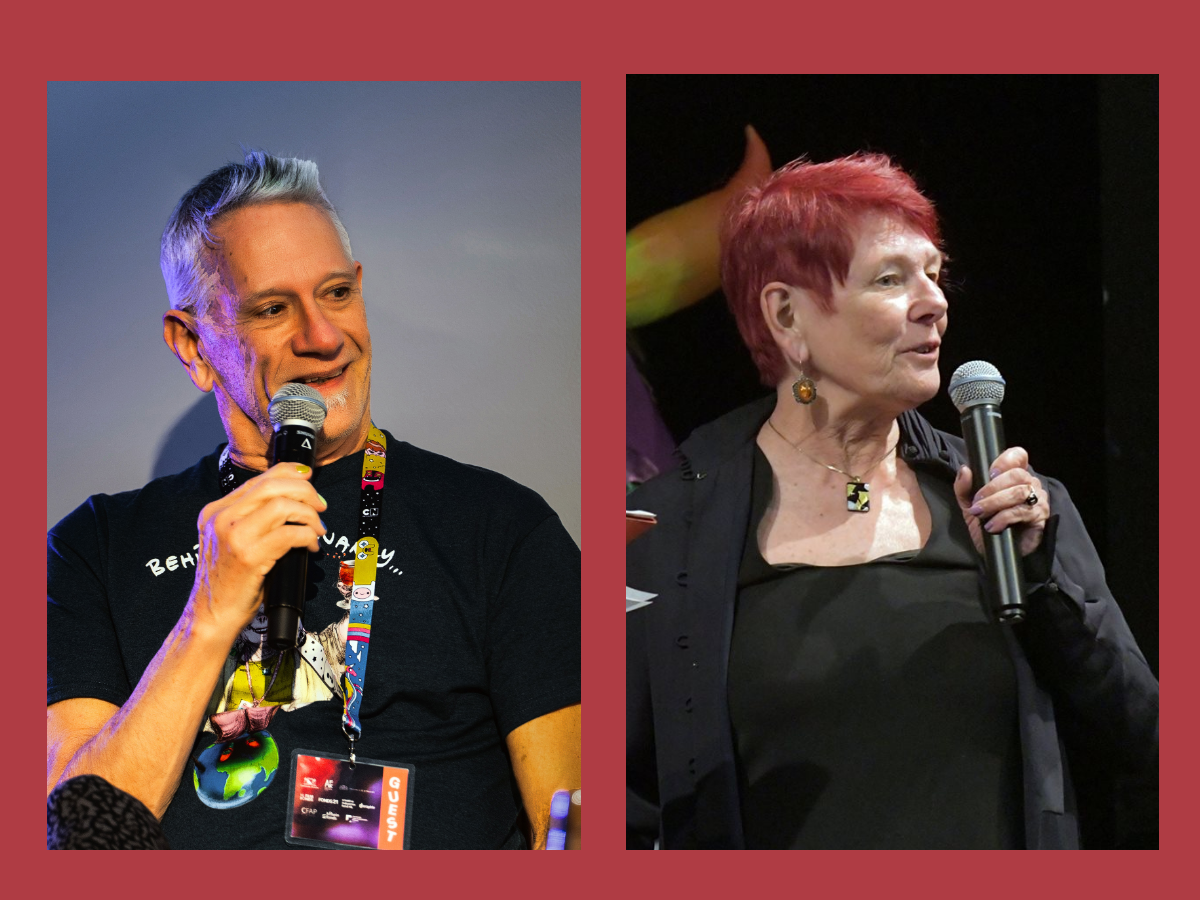
Keynote Speaker: Nik Phelps, Nancy Denney-Phelps
Nancy Denney-Phelps is a journalist writing about European animation and festivals, as well as a producer of music for animation. Along with her composer/musician husband, Nik Phelps, she co-founded the Sprocket Ensemble dedicated to presenting live performances of original music with screenings of contemporary animation from around the world.
Nancy's writings have appeared in such publications as CARTOON and ANIMATOON, and she writes the Sprockets blog for AWN (Animation World Network). She is also a regular correspondent for ASIFA/San Francisco, a member of the ASIFA International Board of Directors, and an Ambassador At Large for the Emile Awards.
Nancy has served on numerous International Animation Festival juries and taught time management for animators at the Lucerne University of Applied Sciences and Arts, School of Art and Design. She is the pitching coach at ANIMARKT in Lodz, Poland, and is a member of their Brain Trust Advisory Board. She also awards the annual Nancy Award at the Kaboom Animation Festival in Amsterdam. Her strong interest in the history of animation has led her to present programs on the history of animation traced through music at many animation festivals and conferences worldwide. She also works as an advisor to several animation festivals, and in 2019, she received a Lifetime Achievement Award from ANIMAKOM Animation Festival in Bilbao, Spain. In 2023, Nancy received a Lifetime Achievement award from the Paris International Animated Film Festival.
I was appalled to learn recently that although today women make up 65% of the student body in most animation schools, they hold a significantly smaller percentage of the creative roles within the animation industry.
Only 23% to be exact!
Most women in animation schools today will make only one independent film after graduation, join a production company for a short period, or pursue a career in teaching. Wait, before you say, “Oh no, not me!”, remember that for every Signe Baumane and Anita Killi who make their films, there are a multitude of talented women who give up.
It also seems strange to me that, although we are all familiar with the Fleischer Brothers and Walt Disney, with a few exceptions, the women who blazed the animation trail are largely unknown.
I would like to introduce you to a few of the women who made it possible for you ladies in the audience to be sitting here today.
Writer: Ming-feng,Chiang
When discussing the history of animation, we often mention figures like Disney or Fleischer, yet we seldom focus on the women who equally contributed to its development. Pioneers such as Lotte Reiniger, Lillian Friedman Astor, Bianca Majolie, Eunice Macaulay, and independent creators like Mary Ellen Bute—who worked outside the major studios—are among the many long-overlooked female trailblazers.
Today’s lecture focuses on one of the most representative women in British animation—Joy Batchelor, the creative backbone of the Halas and Batchelor studio. Although her achievements are often attributed to her husband, John Halas, Batchelor created over a hundred animated works throughout her life, contributing as director, writer, designer, storyboard artist, and animator.
Joy was not born into wealth. After graduating from art school, she worked outside the creative field to make ends meet but was fired after openly criticizing her work environment. Later, she moved to London, joined an animation studio to work on The Music Man, where she met John Halas. The two went to Budapest to produce an animation but returned to London due to funding difficulties and the rise of Nazi Germany. They married in 1940 and co-founded the Halas and Batchelor studio.
During World War II, moving images replaced newspapers as the main medium of propaganda. The couple produced over seventy government and commercial animation shorts rich in social realism. Their studio soon expanded to a team of 15 to 20 members.
After their daughter was born in 1945, Joy continued writing scripts and designing storyboards while balancing family life. Since she mainly worked behind the scenes, the studio’s success was largely credited to John. The studio’s first art film, Magic Canvas, did not list her name, even though she was deeply involved. In 1954, the studio released Animal Farm, the first British feature-length animated film, in which Joy was finally credited for directing, writing, character design, and storyboarding.
As the studio grew, media attention increasingly focused on John, causing Joy’s contributions to fade from public recognition. Balancing family duties and creative work became harder, and journalists often emphasized her role as a housewife rather than a creator—something she deeply resented. In 1972, suffering from arthritis, Joy retired from animation and turned to teaching.
Today, women make up a large portion of animation students in schools. Yet many leave the industry shortly after graduation, often due to marriage, family responsibilities, or unfavorable workplace conditions. This ongoing pattern reminds us that women’s presence in animation still needs greater visibility and support.
We need more women's power in animation to tell women’s stories.